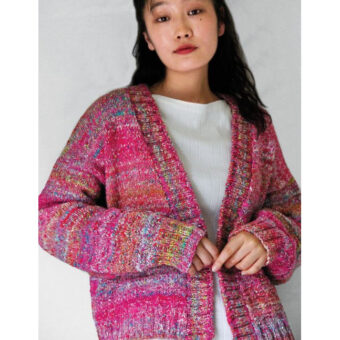
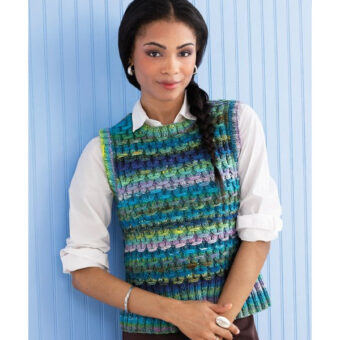
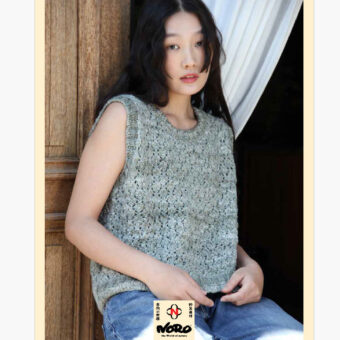
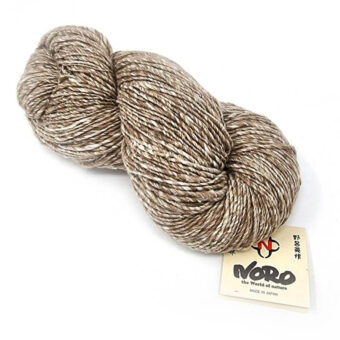
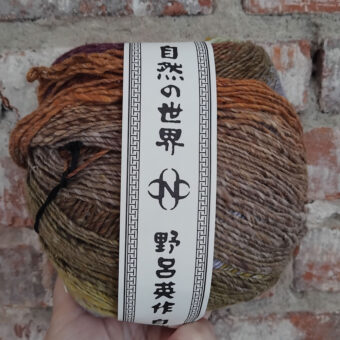
Silk Garden from Noro combines natural fibers such as silk, mohair and wool with modern colors and designs. Like the other Noro yarns, the yarns are made in a gentle process that preserves the unique properties and heterogeneity of the yarn. Silk Garden is a luxury silk-mohair-wool blend in stunning colors, perfect for beautiful sweaters and accessories. If you want to knit in a thinner yarn, try Silk Garden Lite or Silk Garden Sock. Weight: 50 grams Quality: 45% silk and 45% mohair and 10% wool Gauge (10 x 10 cm) = 15 x 20 m Knitting needles size 4.5 - 5 mm Ball of 50 g (approx. 100 m). Hand wash / dry flat Yarn consumption for women's sweater (M) approx. 400 grams About NORO According to Eisaku Noro, founder of NORO, Japanese people have always loved the heterogeneity of nature. This is the background of the NORO yarn philosophy. Natural fibers have some special properties that man cannot copy. Eisaku Noro wants to preserve these properties in his yarns. When making wool yarn, he uses different lengths and thicknesses of wool to produce a structure that resembles the heterogeneous wool of sheep. This is achieved by using hand power and old spinning machines so that the natural wool fiber is not over-processed. Impurities in the wool are gently removed by hand, without the use of chemical treatments. This is both good for the wool and especially for the environment. All the wool used to make the yarns is sourced from organic farms in Australia, the Falkland Islands and South Africa. Designer and founder Eisaku Noro is personally involved in controlling all aspects of production, from visits to the farms to the machinery used and dyeing processes. This is to ensure that the products are as eco-friendly as possible. The treatment of the wool, such as friction and heat, weakens the fibers. Minimizing the treatment of the wool avoids destroying the structure of the wool and at the same time it is of great benefit to the environment.
Silk Garden Solo - Omitama #S1
Den oprindelige pris var: kr. 131,00.kr. 119,00Den aktuelle pris er: kr. 119,00. (Plus freight)
Only 5 left in stock
SALE
 SALE
SALE
Silk Garden Solo - Omitama #S1
Den oprindelige pris var: kr. 131,00.kr. 119,00Den aktuelle pris er: kr. 119,00. (Plus freight)
(Plus freight)
NOTE: 50 gram skein
Please note that the color of the yarn on your screen may differ from reality - contact me if in doubt.
Only 5 left in stock
See also
-
SALE
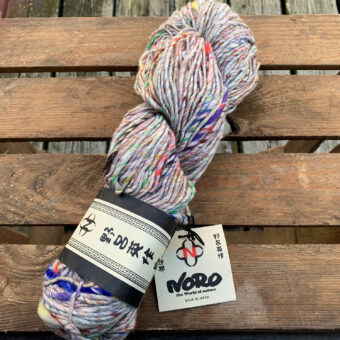 Select options This item has several variants. The options can be selected on the item page
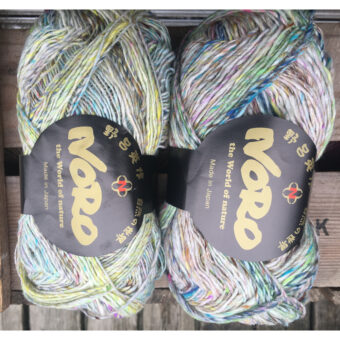
Noro Madara
Den oprindelige pris var: kr. 243,00.kr. 189,00Den aktuelle pris er: kr. 189,00. (Plus freight)(In stock)
-
 Select options This item has several variants. The options can be selected on the item page
Silk Garden Sock - Noro
Den oprindelige pris var: kr. 209,00.kr. 179,00Den aktuelle pris er: kr. 179,00. (Plus freight)(In stock)
-
 Select options This item has several variants. The options can be selected on the item page
Silk Garden Sock (multicolored) - Noro SALE
Den oprindelige pris var: kr. 209,00.kr. 149,00Den aktuelle pris er: kr. 149,00. (Plus freight)(In stock)
-
 Add to cart
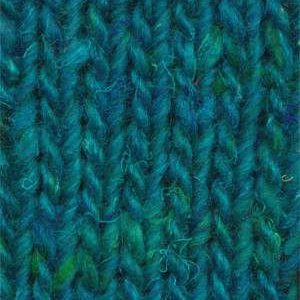
Silk Garden Solo - Sakai #S11
Den oprindelige pris var: kr. 131,00.kr. 99,00Den aktuelle pris er: kr. 99,00. (Plus freight)(In stock)
-
 Add to cart
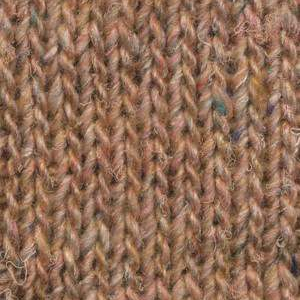
Silk Garden Solo - Sumoto #S38
Den oprindelige pris var: kr. 131,00.kr. 99,00Den aktuelle pris er: kr. 99,00. (Plus freight)Only 7 left in stock
-
 Add to cart
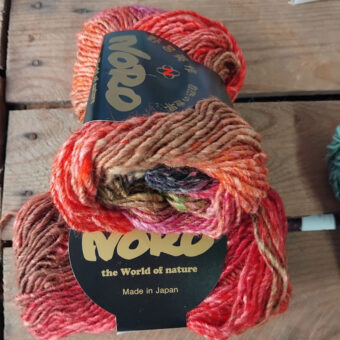
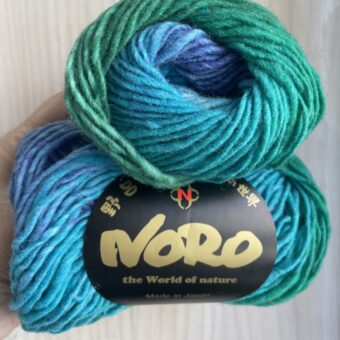
Silk Garden – Otaru #84
Den oprindelige pris var: kr. 131,00.kr. 119,00Den aktuelle pris er: kr. 119,00. (Plus freight)Only 3 left in stock
-
 Add to cart
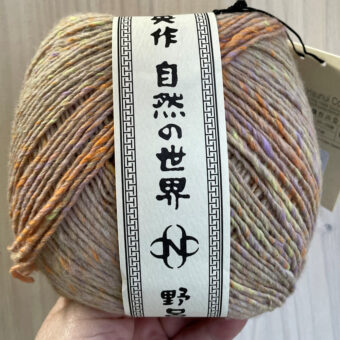
Kureyon - #454
Den oprindelige pris var: kr. 99,00.kr. 89,00Den aktuelle pris er: kr. 89,00. (Plus freight)Only 9 left in stock
-
 Select options This item has several variants. The options can be selected on the item page
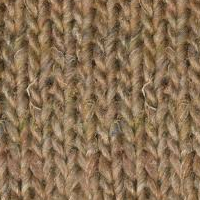
Noro Haunui Cotton
Den oprindelige pris var: kr. 329,00.kr. 275,00Den aktuelle pris er: kr. 275,00. (Plus freight)(In stock)
-
 Add to cart
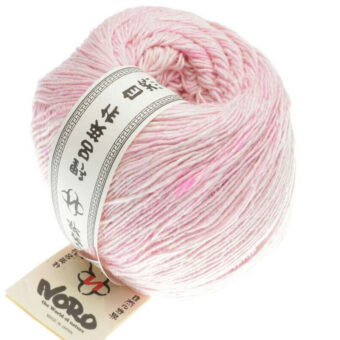
Silk Garden Solo - Ureshino #S51
Den oprindelige pris var: kr. 131,00.kr. 99,00Den aktuelle pris er: kr. 99,00. (Plus freight)(In stock)
-
 Add to cart
Akari solo #32 – Kiyosu
Den oprindelige pris var: kr. 342,00.kr. 325,00Den aktuelle pris er: kr. 325,00. (Plus freight)(not in stock)
-
 Select options This item has several variants. The options can be selected on the item page
Rikka - Noro
Den oprindelige pris var: kr. 425,00.kr. 409,00Den aktuelle pris er: kr. 409,00. (Plus freight)(In stock)
-
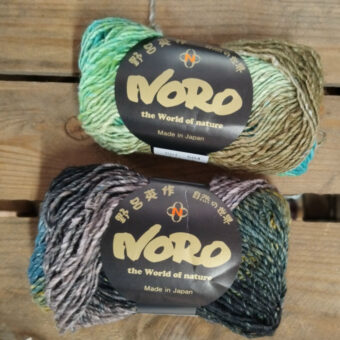 Add to cart
Silk Garden – Yokohama #504
Den oprindelige pris var: kr. 131,00.kr. 119,00Den aktuelle pris er: kr. 119,00. (Plus freight)(In stock)
-
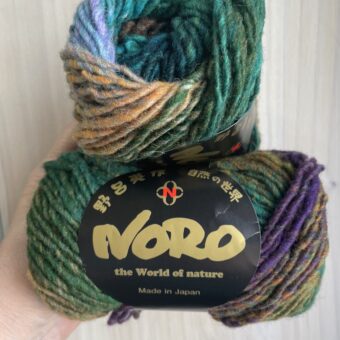 Add to cart
Kureyon – #397
Den oprindelige pris var: kr. 99,00.kr. 89,00Den aktuelle pris er: kr. 89,00. (Plus freight)Only 5 left in stock
-
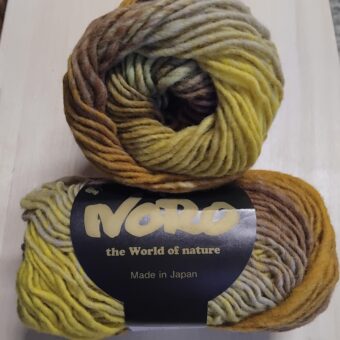 Add to cart
Kureyon – Okayama #457
Den oprindelige pris var: kr. 99,00.kr. 89,00Den aktuelle pris er: kr. 89,00. (Plus freight)Only 5 left in stock
-
 Add to cart
Kureyon - #428
Den oprindelige pris var: kr. 99,00.kr. 89,00Den aktuelle pris er: kr. 89,00. (Plus freight)Only 6 left in stock
-
Gratis download
 Add to cart
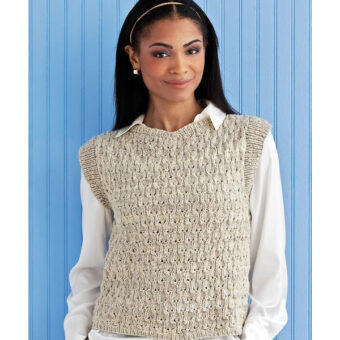
NORO Haunui Silk opskrift – slipover (EN, DE, FR, NL)
kr. 0,00 (Plus freight)(In stock)
-
 Add to cart
Kureyon - #208
Den oprindelige pris var: kr. 99,00.kr. 89,00Den aktuelle pris er: kr. 89,00. (Plus freight)Only 8 left in stock
-
 Add to cart
Kureyon - Yokote #471
Den oprindelige pris var: kr. 99,00.kr. 89,00Den aktuelle pris er: kr. 89,00. (Plus freight)Only 9 left in stock
-
 Add to cart
Kureyon - #459
Den oprindelige pris var: kr. 99,00.kr. 89,00Den aktuelle pris er: kr. 89,00. (Plus freight)(In stock)
-
 Select options This item has several variants. The options can be selected on the item page
NORO Haunui Silk
Den oprindelige pris var: kr. 395,00.kr. 364,00Den aktuelle pris er: kr. 364,00. (Plus freight)(In stock)
-
 Add to cart
Noro Tsubame - 08 (OUTGOING)
Den oprindelige pris var: kr. 410,00.kr. 290,00Den aktuelle pris er: kr. 290,00. (Plus freight)Only 1 left in stock
-
 Select options This item has several variants. The options can be selected on the item page
Noro Kompeito
Den oprindelige pris var: kr. 405,00.kr. 299,00Den aktuelle pris er: kr. 299,00. (Plus freight)Only 8 left in stock